The 50/10 Rule vs. 25/5 Pomodoro: Which Focus Interval Actually Works?

Photo by Pexels · Free to use
You've probably tried the classic 25-minute Pomodoro sprint. You've also probably seen people online swearing by the 50/10 rule instead. Both promise the same thing: fewer distractions, more done, less burnout. So which one actually works?
The honest answer is: it depends on your brain, your task, and how your attention span behaves on any given day. But that's not a very satisfying answer, so let's actually break down what each method does, where it falls apart, and how to pick the right one without guessing.
What Is the 25/5 Pomodoro Technique?
The Pomodoro Technique was created in the late 1980s by Francesco Cirillo, who used a tomato-shaped kitchen timer to break his study sessions into short, structured chunks. The formula is simple:
- Work for 25 minutes, fully focused on one task
- Take a 5-minute break
- Repeat four times, then take a longer 15-30 minute break
The appeal is obvious. Twenty-five minutes feels short enough that almost anyone can commit to it, even when they're dreading the task. It turns "I have to work for hours" into "I just need to survive one tomato." That psychological trick is the entire reason Pomodoro became so popular.
What Is the 50/10 Rule?
The 50/10 rule follows the same logic but stretches the work interval and shrinks the ratio of break to work. Instead of 25 minutes on and 5 off, you work for 50 minutes and rest for 10. The idea is based on research into ultradian rhythms, the natural 90-120 minute cycles of alertness your brain moves through during the day. Supporters argue that 25 minutes is barely enough time to get into a real state of flow before you're forced to stop, while 50 minutes gives your brain room to actually sink into deep work.
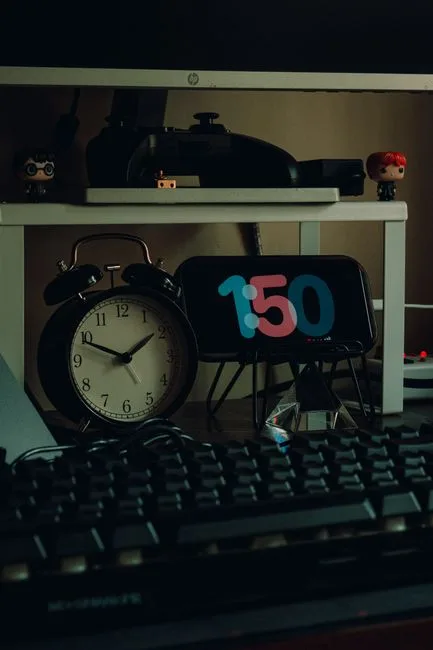
The Core Difference: Momentum vs. Frequency
This is really the whole debate in one sentence. Pomodoro optimizes for frequency: more checkpoints, more small wins, more chances to recalibrate if you get distracted. The 50/10 rule optimizes for momentum: fewer interruptions, longer stretches of uninterrupted thought, and more room for complex problem-solving to actually happen.
Neither one is objectively better. They're built for different kinds of work and different kinds of brains.
When 25/5 Pomodoro Works Best
- Tasks with lots of small, discrete steps — answering emails, clearing a to-do list, doing admin work
- When you're deeply avoiding a task — 25 minutes feels low-stakes enough to actually start
- When your attention span is already fragmented — if you're overstimulated, tired, or coming off a scroll session, 25 minutes is more realistic than 50
- Learning new, difficult material — frequent breaks help with information retention and prevent fatigue
When the 50/10 Rule Works Best
- Deep, complex work — writing, coding, designing, or anything that requires holding a lot of context in your head at once
- Tasks with a real warm-up cost — if it takes you 10-15 minutes just to get into the zone, a 25-minute timer barely gives you 10 productive minutes before the break interrupts you
- When you already have decent focus stamina — the 50/10 rule assumes you can sustain attention without needing a frequent escape hatch
- Creative or strategic thinking — ideas that need room to connect don't always show up in the first 20 minutes

The Research Behind Both
Neither interval is magic. What the research actually supports is simpler than either technique claims:
- Attention naturally declines over time, and scheduled breaks help restore it. This is true whether the cycle is 25 minutes or 50.
- Ultradian rhythms are real, but they vary by person. Some people's natural focus cycle is closer to 90 minutes, others dip much sooner.
- The break matters as much as the work interval. A 5-minute break spent checking your phone does almost nothing for recovery. A 10-minute break spent stretching, walking, or staring out a window actually restores attention.
- Starting is the hardest part, which is why shorter intervals tend to win for people who struggle with procrastination, regardless of what the ultradian research says.
So the "right" interval is less about a universal formula and more about which one you'll actually stick with.
Which One Should You Actually Use?
Here's a simple way to decide, based on the task in front of you rather than whichever technique is trending:
| If your task is... | Try... |
|---|---|
| Short, repetitive, or admin-heavy | 25/5 Pomodoro |
| You're procrastinating hard | 25/5 Pomodoro |
| Deep, complex, or creative | 50/10 Rule |
| You need 10+ minutes just to warm up | 50/10 Rule |
| You're mentally fried already | 25/5 Pomodoro (or shorter) |
| You have a full, uninterrupted block of time | 50/10 Rule |
A lot of people end up doing a hybrid: Pomodoro sprints early in the day to clear small tasks and build momentum, then switching to 50/10 blocks later for the one task that actually requires deep thinking.

The Real Problem Isn't the Interval, It's What You're Focusing On
Here's the part most articles about focus intervals skip entirely. You can have the perfect timer ratio and still feel exhausted by focus, because the real issue isn't 25 vs. 50 minutes. It's that a lot of people are spending their focused time maintaining skills that don't matter anymore, instead of building the ones that do.
If you're a freelancer whose client work is drying up because of AI, or an office worker whose role is quietly shifting, no timer interval fixes that. What fixes it is deciding, on purpose, what you're going to stop doing, and giving your full, undistracted attention to what's next. That's a decision that has to happen before the timer even starts.
This is exactly the gap Unlearn Skill was built to close. Before you pick a focus interval, you sort your skills into Stop, Keep, or Start, so your focus sessions are actually pointed at something worth building, instead of just recycling the same habits because they feel familiar.

How to Try Both Without Overthinking It
You don't need to pick a side forever. Try this for one week:
- Day 1-3: Use 25/5 Pomodoro for everything. Notice how often you hit flow before the timer cuts you off.
- Day 4-7: Switch to 50/10 for your hardest task of the day. Notice whether the longer stretch actually produces better work, or just feels harder to start.
Whichever one makes you actually show up consistently is the one that works. A perfect interval you abandon after two days is worse than an imperfect one you use every day.
Make Every Session Count With Unlearn Skill
Once you know which interval fits your brain, the next question is what you're pointing that focus at. Unlearn Skill is a calm, free focus app built around one idea: it's hard to learn something new while your head is still busy maintaining the old thing.
With Unlearn Skill, you:
- Take a slow 30-minute check-in and sort your skills into Stop, Keep, or Start
- Retire the skills that no longer serve you, without guilt
- Start a focus session with one tap, using whatever interval works best for you
- Build something real while your focus time adds up, from a woodland cabin to a satellite, out of more than 20 things to build
- Review your progress regularly to make sure you're still headed the right direction
The app works without an account, keeps everything private on your device, and has no ads, no in-app purchases, and no tracking.
Whether you land on 25/5, 50/10, or your own hybrid, the timer is just the container. What you put inside it is what actually moves you forward.
Download Unlearn Skill and start your first focused build today.
FAQ
Is 50/10 better than 25/5 for ADHD?
Not necessarily. Many people with ADHD do better with shorter intervals like 25/5 or even shorter, since sustaining attention for 50 minutes can be harder before the brain has built up focus stamina. Start short and extend gradually if it feels sustainable.
Can I customize the break length?
Yes. Neither ratio is a strict law. Some people use 50 minutes of work with a 5-minute break, or 25 minutes of work with a 10-minute break. Adjust based on how depleted you feel afterward.
Does the type of task matter more than the interval?
Generally, yes. Repetitive or low-complexity tasks tend to suit shorter intervals, while deep or creative work tends to benefit from longer, uninterrupted stretches.
What matters more than the exact numbers?
Consistency. Showing up for a focus session every day, even an imperfect one, builds more progress over time than chasing the "perfect" interval and skipping days.
Unlearn Skill is free and calm. Available now for Chrome and Android.
Related Reading
- Why Most Focus Apps Fail (And How Habit Unlearning Fixes Procrastination)
- Best Focus Apps for Adult Career Transitions and Reskilling in the AI Era
- The Stop / Keep / Start audit: a 30-minute unlearn exercise
This article was written by the Unlearn Skill team. Images sourced from Pexels under the Pexels Free License.
← Back to notes